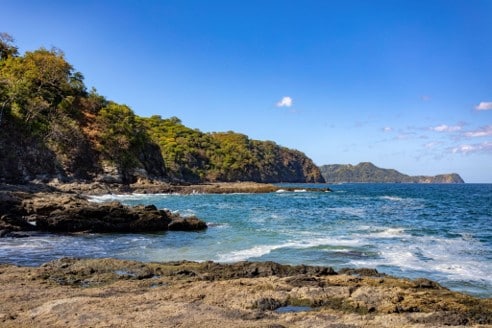
The same geological forces responsible for earthquakes have also created many of Costa Rica’s most spectacular attractions.
Volcanoes provide breathtaking hiking opportunities, crater lakes, lava fields, geothermal hot springs, and panoramic viewpoints. Mountain ranges create ideal habitats for cloud forests and wildlife. Rivers flowing through uplifted terrain have carved dramatic canyons and waterfalls, while volcanic soils support lush forests and highly productive farmland.
Even Costa Rica’s coastlines continue to evolve as tectonic uplift and erosion reshape beaches, cliffs, and marine terraces over time.
Rather than viewing earthquakes solely as natural hazards, they can also be understood as part of the ongoing geological processes that have made Costa Rica one of the world’s most diverse and beautiful countries.
Because tectonic activity remains active today, Costa Rica serves as an exceptional natural laboratory for geologists, volcanologists, biologists, and environmental scientists from around the world.
Researchers study everything from volcanic eruptions and earthquake mechanics to geothermal energy, mountain formation, and ecosystem development. The close relationship between geology and biodiversity makes Costa Rica an ideal place to understand how Earth’s physical processes influence climate, habitats, and species evolution.
Universities and research institutions frequently collaborate with Costa Rican scientists, making the country an internationally recognized center for geological and environmental research.
For visitors, understanding Costa Rica’s geology transforms an ordinary vacation into an educational adventure. Every volcano, mountain, canyon, waterfall, river, and coastline reflects millions of years of Earth’s history and the powerful forces operating beneath the surface.
Whether hiking to the crater of Poás Volcano, relaxing in Arenal’s geothermal hot springs, exploring the volcanic landscapes of Rincón de la Vieja, or admiring the panoramic views from Irazú Volcano, travelers are witnessing the results of tectonic processes that continue today.
Costa Rica’s dynamic geology is much more than a scientific topic—it is the foundation of the country’s fertile soils, abundant freshwater, renewable geothermal energy, extraordinary biodiversity, and thriving ecotourism industry.
By understanding the relationship between tectonic plates, earthquakes, and volcanoes, visitors gain a greater appreciation for the remarkable natural forces that have shaped Costa Rica into one of the world’s most extraordinary travel destinations.

Web Design and Concept by CORAL