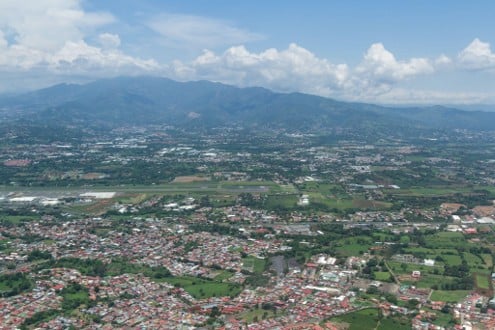
Costa Rica is internationally recognized for its extraordinary geographic diversity. While its mountains and volcanoes often take center stage, the country’s plains and valleys play an equally important role in its economy, biodiversity, and tourism. These regions offer unique landscapes, fertile lands, and a wide variety of ecosystems, making Costa Rica one of the world’s most diverse natural destinations.
Valleys are low-lying areas located between mountain ranges, characterized by pleasant climates, fertile soils, and a high concentration of population. They have historically been the center of Costa Rica’s agricultural, industrial, and urban development.
The Central Valley is Costa Rica’s most populated region and is home to the country’s major cities, including San José, Alajuela, Heredia, and Cartago. Thanks to its elevation, ranging from approximately 800 to 1,500 meters (2,625 to 4,920 feet) above sea level, the region enjoys mild temperatures throughout the year.
Historically, the Central Valley was the heart of Costa Rica’s coffee industry, which played a key role in the country’s economic growth during the 19th century. Today, the region blends modern urban centers with coffee plantations, botanical gardens, national parks, and nearby volcanoes such as Poás and Irazú.
Located in the province of Cartago, the Orosi Valley is known for its lush vegetation, rich history, and peaceful atmosphere. Surrounded by mountains and crossed by the Reventazón River, it offers breathtaking scenery for travelers seeking nature and relaxation.
Among its main attractions are the Colonial Church of Orosi, Tapantí National Park, and the area’s natural hot springs, which welcome both local and international visitors throughout the year.
Located in southern Costa Rica, El General Valley is one of the country’s largest valleys. Its economy is primarily based on agriculture, livestock farming, and tropical fruit production.
The valley also serves as the gateway to Chirripó National Park, home to Cerro Chirripó, Costa Rica’s highest mountain. Visitors can enjoy beautiful rural landscapes that showcase the country’s traditional way of life.

Web Design and Concept by CORAL