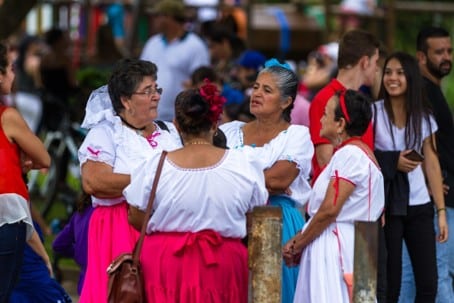
Costa Rica is widely known for its breathtaking rainforests, volcanoes, and beaches, but it is also home to a rich Indigenous heritage that has shaped the country’s history and cultural identity for thousands of years. Today, eight officially recognized Indigenous peoples continue to preserve their languages, traditions, spiritual beliefs, and sustainable ways of life, offering visitors a deeper understanding of Costa Rica’s cultural diversity.
Costa Rica is home to eight Indigenous groups, each with its own language, customs, and cultural traditions:
These communities are primarily located in protected Indigenous territories throughout the provinces of Limón, Puntarenas, Alajuela, and San José. Many continue to practice traditional agriculture, craftsmanship, and ceremonies while balancing modern life with the preservation of their cultural identity.
Long before the arrival of the Spanish in the 16th century, Indigenous peoples had established complex societies across what is now Costa Rica. They cultivated crops such as maize, beans, cacao, cassava, and tropical fruits, while maintaining extensive trade networks with neighboring regions.
Their knowledge of the rainforest allowed them to live sustainably, using medicinal plants, natural fibers, and local materials to build homes, create tools, and produce clothing and artwork.
Several Indigenous languages are still spoken today, particularly among the Bribri, Cabécar, Maleku, and Ngäbe communities. These languages are an essential part of each group’s identity and are actively preserved through schools, storytelling, and cultural education programs.
Oral traditions continue to play an important role, passing down legends, historical knowledge, and spiritual beliefs from one generation to the next.
Costa Rica’s Indigenous communities are renowned for their handcrafted art, much of which reflects their close relationship with nature.
Traditional crafts include:
These handcrafted products not only preserve cultural traditions but also provide sustainable sources of income for many Indigenous families.
Nature plays a central role in Indigenous spirituality. Mountains, rivers, forests, and animals are often regarded as sacred, and many ceremonies honor the balance between people and the natural world.
Among the Bribri people, cacao holds deep spiritual significance and is considered a sacred gift. Traditional cacao ceremonies continue to celebrate its cultural, medicinal, and ceremonial importance.
Respect for the environment remains a guiding principle in many Indigenous communities, whose traditional ecological knowledge has contributed to the conservation of Costa Rica’s forests for generations.

Web Design and Concept by CORAL