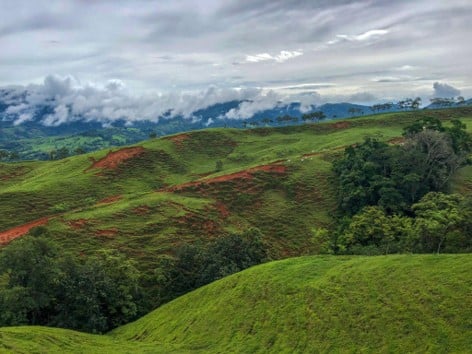
Costa Rica’s reputation as a global leader in agriculture is deeply connected to its volcanic origins. While the country’s volcanoes are famous for their dramatic eruptions and breathtaking scenery, one of their greatest contributions is far less obvious: the creation of some of the most fertile soils in the world. Over millions of years, volcanic activity has transformed the landscape, enriching the earth with essential minerals that support thriving ecosystems, productive farmland, and a diverse range of crops.
Today, Costa Rica’s volcanic soils are the foundation of its agricultural success, helping produce world-famous coffee, tropical fruits, vegetables, sugarcane, flowers, and many other crops that are exported around the globe. The country’s fertile landscapes are a remarkable example of how powerful geological forces can create ideal conditions for both nature and human development.
Volcanic soil begins with eruptions that release lava, ash, rocks, and volcanic gases. As these materials cool and gradually break down through weathering, they mix with organic matter, rainfall, and microorganisms to create nutrient-rich soils. This natural process can take hundreds or even thousands of years, resulting in land that is exceptionally productive.
Unlike many older tropical soils that have lost nutrients through heavy rainfall and erosion, Costa Rica’s volcanic regions are continually replenished by fresh mineral deposits. These young soils contain high concentrations of potassium, phosphorus, calcium, magnesium, iron, and other essential elements that promote healthy plant growth.
The porous nature of volcanic soil also allows roots to grow easily while retaining enough moisture for crops to flourish during changing weather conditions.
The Central Valley is one of the country’s most important agricultural regions and home to a large portion of Costa Rica’s population. Surrounded by volcanoes such as Poás, Barva, Irazú, and Turrialba, the valley has benefited from thousands of years of volcanic ash deposits that have created deep, fertile soils.
Combined with moderate temperatures, abundant rainfall, and elevations ranging between 800 and 1,600 meters (2,600–5,250 feet), these geological conditions provide an ideal environment for agriculture.
The Central Valley produces a wide variety of crops, including vegetables, coffee, ornamental plants, dairy products, and fruits. Many of the country’s farming communities have prospered because of the rich volcanic earth that continues to nourish their fields.

Web Design and Concept by CORAL